










One incident at one site is a story. Twelve sites with no shared picture is a liability.
Security Incident Management
JMG SECURITY SYSTEMS helps commercial and enterprise organizations turn camera, access control, and alarm signals into a clear response, from alert to escalation and review. Service is available from the Central Coast through Southern California and San Diego.
✓
Running five, ten, or fifty locations with no shared incident picture? We'll show you what corporate is currently missing.
Local experience
Coordinating SoCal enterprise portfolios since 1987
System approach
Unified cross-site command
Infrastructure
Standardized escalation hierarchy
System fit
Board-ready portfolio reporting
Why portfolio-wide risk stays invisible
Enterprise-Wide Incident Pattern Visibility
Site-level teams handle what happens in front of them, close the ticket, and move on, which is exactly why the same bad actor hitting three different branches, or the same operational failure repeating across a region, can go unnoticed for months when nobody's looking at the portfolio as a whole.
01
Every location manages incidents in its own silo
One site's incident register never talks to another's, even when the same threat is hitting both.
JMG response
JMG SECURITY SYSTEMS consolidates incident data into a single enterprise register visible across the portfolio.
02
Inconsistent Incident Escalation
Without a defined hierarchy, a serious incident can sit at the site level far longer than it should.
JMG response
A standardized escalation ladder routes incidents to the right corporate tier automatically.
03
Inconsistent Incident Severity
One site's "minor" is another site's "major," which makes portfolio-wide comparison meaningless.
JMG response
A unified severity taxonomy applies the same standard across every entity and location.
04
Delayed Incident Escalation
Executives get informed reactively, once an issue has escalated past the point of easy correction.
JMG response
Real-time portfolio dashboards give leadership visibility before a small issue becomes a large one.
What enterprise incident management actually covers
Unified Incident Command
Enterprise incident management is the coordination layer above individual site handling, it standardizes how incidents get classified, connects related events across locations, and makes sure the right level of leadership sees the right information at the right time.
01
Cross-Site Incident Register
Every location's incidents consolidated into a single, searchable enterprise record.
02
Standardized Escalation Hierarchy
Defined routing from site manager to regional lead to executive leadership based on severity.
03
Cross-Site Pattern Detection
Related incidents across different locations linked and flagged automatically.
04
Portfolio-Wide Severity Taxonomy
One consistent classification standard applied across every entity and site.
05
Business Continuity Integration
Incident triggers tied directly into continuity and recovery protocols where applicable.
06
Board & Executive Reporting
Portfolio-level summaries built for leadership review, not site-by-site detail.
From a site-level event to a corporate decision
Site Incident Escalation Criteria
The gap between a local event and an informed executive decision is entirely a function of process, without a defined escalation structure, that gap can swallow weeks of warning signs before anyone above the site level knows a problem exists.
Capture
Site-Level Incident Management
A local event is logged into the enterprise register.
Classification
Portfolio-Wide Severity Classification
The same taxonomy applies regardless of location.
Correlation
Cross-Site Incident Correlation
Cross-site correlation flags patterns across the portfolio.
Escalation
Automated Severity-Based Escalation
The incident reaches regional or executive leadership as warranted.
Enterprise Escalation Workflow
Portfolio-Level Reporting
Leadership dashboards and board reporting reflect the incident in context.
What is physical security incident management?
How Does The Design Change With Facility Scale?
A smaller deployment may coordinate a limited number of high-value event types for one facility and a small response team. A complex enterprise deployment may require multiple sites, time zones, operator groups, shared standards, local exceptions, federated administration, integrations and management reporting. Scale should be defined by operating complexity and decision requirements—not simply by the number of devices.

Can It Be Standalone Or Integrated?
A standalone incident log may improve reporting without controlling physical-security devices. An integrated workflow can receive events and context from compatible systems. A unified platform may place security functions and incident actions in one interface. The right model depends on existing investments, desired control, interoperability, ownership, budget and acceptable change. JMG SECURITY SYSTEMS evaluates fit based on the approved project scope.

Can It Support Cloud, On-Premise Or Hybrid Deployment?
Yes, where supported by the selected products and design. Cloud services can simplify distributed access and updates; on-premise systems can support local control and specific infrastructure requirements; hybrid designs can combine local processing with centralized services. Buyers should evaluate connectivity, identity, latency, failover, data location, licenses, maintenance and the operating path when a dependency is unavailable.
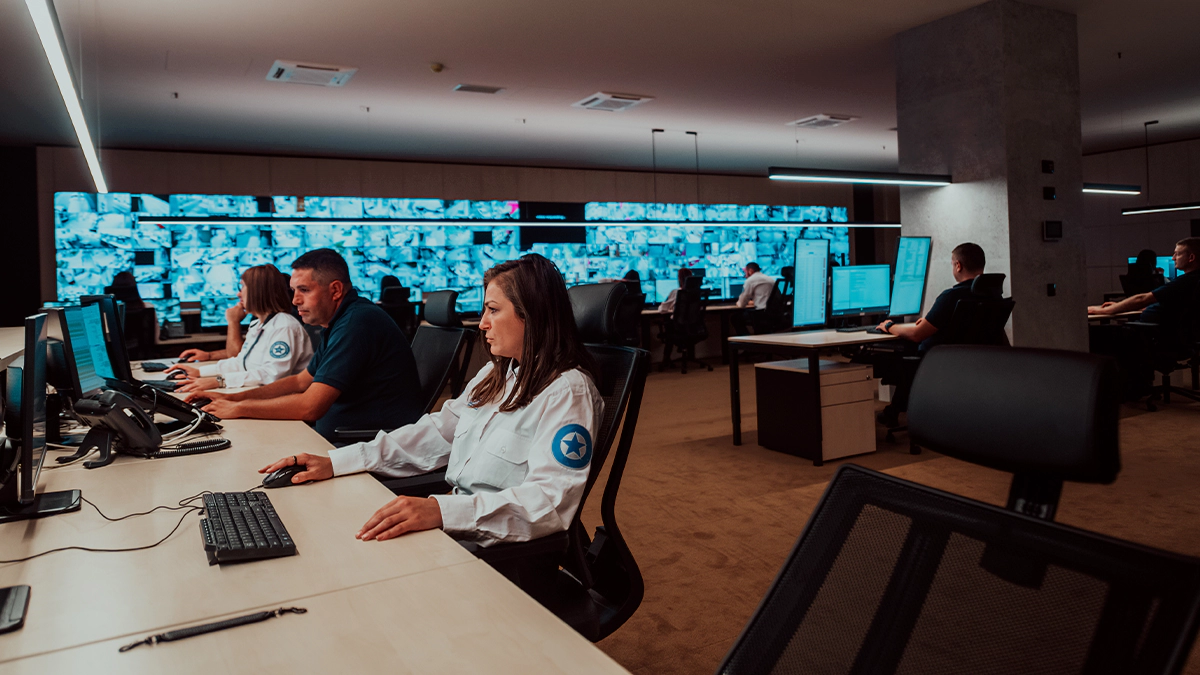
How Does Multi-Site Incident Management Work?
Multi-site management can standardize incident categories, priorities, role definitions and reports while preserving site-specific contacts, devices and procedures. Central teams may receive enterprise visibility, while local teams retain assigned actions. Effective governance requires an owner for the standard, a controlled exception process and testing after relevant system, staffing, network or facility changes.

Can This Integrate With Our Existing Regional Management Structure?
Yes, the escalation hierarchy is typically built around your organization's existing regional and corporate reporting lines rather than imposing a new structure.

Built for the moment leadership needs the full picture
Cross-Site Incident Command
JMG SECURITY SYSTEMS designs enterprise incident structures around the scenario that exposes disconnected systems fastest, a threat, failure, or pattern that touches multiple locations at once and demands a coordinated, not fragmented, response.
Cross-site pattern detection
Early Pattern Detection
Related incidents across separate locations are automatically flagged and linked, so a repeating threat or failure gets identified as a portfolio-wide pattern long before it would surface through manual, site-by-site comparison.
Standardized escalation hierarchy
Executive Escalation Path
Incidents route automatically to the appropriate tier of leadership based on a consistent severity standard, so a serious event doesn't stay parked at the site level simply because nobody above it was notified.
Dashboard
Enterprise Security
Enterprise Command View
Command structure shaped by your portfolio
Scalable Enterprise Security Strategy
How an enterprise command structure gets built, escalation depth, reporting frequency, correlation scope, depends heavily on how many locations are involved, how they're organized, and how centralized decision-making already is.
01
Multi-Branch Financial Institutions
Standardized escalation across branches with regulatory reporting built in.
02
Regional & National Retail Chains
Cross-location pattern detection for theft, fraud, and operational incidents.
03
Healthcare Systems & Hospital Networks
Coordinated command across facilities with clinical-sensitivity awareness.
04
Multi-Site Industrial & Logistics Operations
Enterprise visibility across geographically dispersed operational sites.
05
Franchise & Multi-Brand Organizations
Consistent standards applied across independently operated locations.
06
Corporate Campuses & Multi-Building Portfolios
Unified command across facilities under one ownership structure.
Unified Command Visibility
A pattern repeating across your portfolio is invisible until something finally connects the sites.