



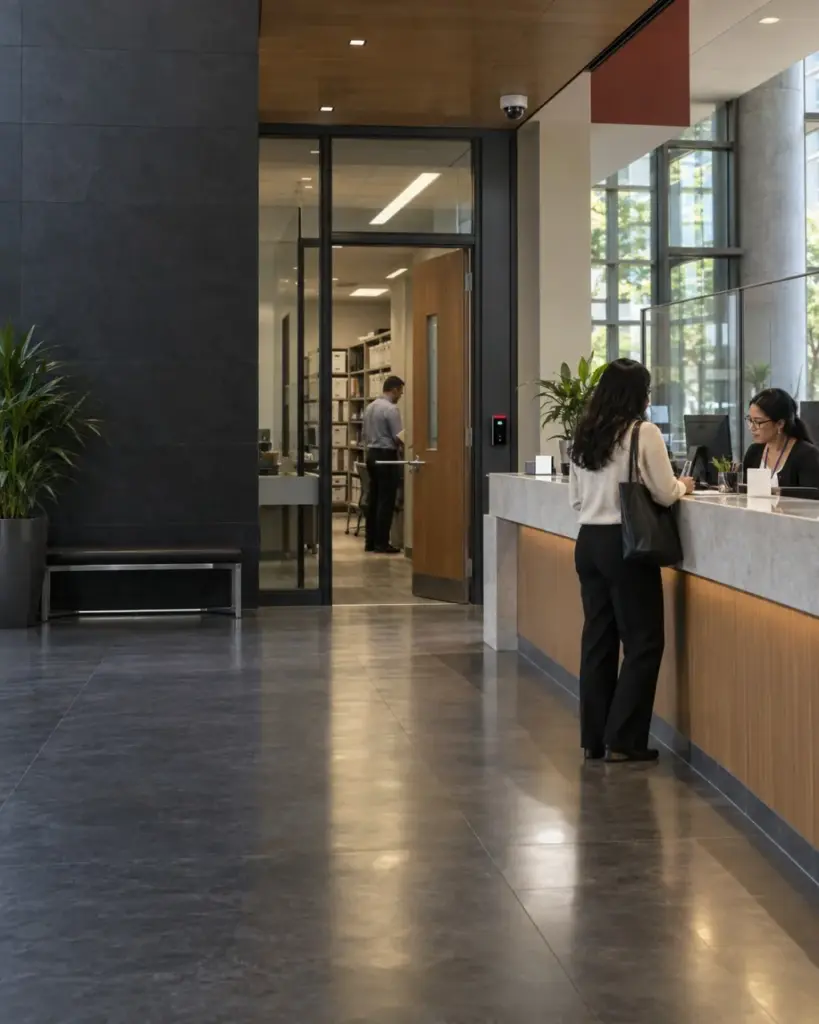




Fewer false alarms. Faster real ones.
Alarm Management
False alarms waste time and reduce confidence in security systems. JMG SECURITY SYSTEMS reviews, optimizes, and manages commercial alarm systems to improve alert accuracy and response readiness.
✓
Already have an alarm panel? We’ll audit what’s triggering it before touching a wire.
Local experience
Managing SoCal alarm programs since 1987
System approach
False-alarm reduction focus
Infrastructure
Multi-site signal consolidation
System fit
Panel-agnostic assessment
The credibility problem
Four-Layer Alarm Protection
JMG SECURITY SYSTEMS helps businesses improve alarm reliability through assessment, intelligent configuration, professional monitoring, and ongoing system support.
01
Alarm System Assessment
Identify weaknesses and improve your alarm system.
02
Intelligent Alert Management
Configure alarms to reduce false alerts and focus on critical threats.
03
Professional Monitoring Integration
Connect alarms with trained monitoring professionals to verify events and guide response.
04
Ongoing System Optimization
Maintain reliable alarm performance through regular reviews and ongoing support.
One alarm management partner
Keep Your Alarm System Reliable
JMG SECURITY SYSTEMS manages the details behind your alarm system, from reducing false alarms to maintaining communication, compliance, and response procedures as your business changes.
01
False Alarm Analysis
Identify recurring alarm triggers and problem zones before they become ongoing disruptions.
02
Central Station Coordination
Keep monitoring instructions, contacts, and communication processes accurate and up to date.
03
Alarm Permit Compliance
Stay aligned with local alarm requirements, permit renewals, and false alarm guidelines.
04
System Health Monitoring
Detect communication issues, low batteries, and equipment problems before they create security gaps.
05
Response Protocol Management
Create clear response procedures so the right people know what to do during an alarm event.
06
Multi-Site Alarm Administration
Manage alarm systems, contacts, and event history across multiple locations from one coordinated process.
Nobody's asking you to rip out a working panel.
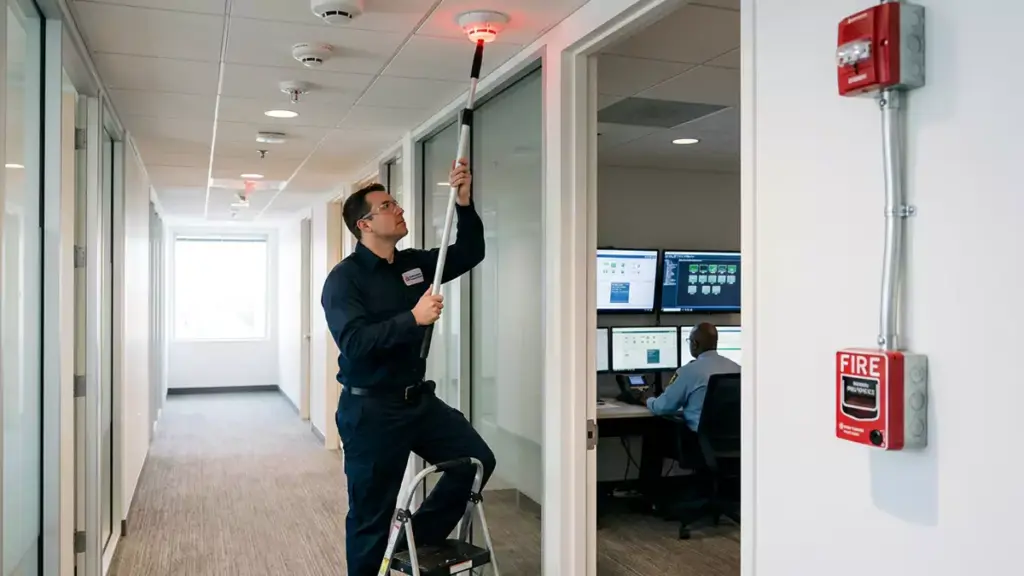
Alarm Systems Fire
Fire risk isn't just a life-safety issue, it's a business continuity one: a delayed detection can mean the difference between a contained incident and a total loss of inventory, equipment, or the building itself. Commercial fire alarm requirements vary by occupancy type and local code, and a system that's outdated or poorly maintained can fail exactly when it's needed, or worse, trigger false alarms that lead staff to stop taking them seriously. Detection is only half the system; how quickly that alert reaches monitoring and gets a response is what actually limits damage. JMG SECURITY SYSTEMS designs and maintains commercial fire alarm systems around each facility's occupancy and layout, then keeps them under ongoing monitoring and testing, so compliance and response readiness stay current instead of drifting until the next inspection catches a problem.
Alarm System For Business
Every commercial facility carries some baseline risk, break-ins, after-hours intrusion, unauthorized access, but the right alarm system depends on what's actually being protected: inventory, equipment, sensitive areas, or a combination that changes by location within the same building. A generic system covering only entry points often misses the risk that matters most, while an oversized system creates false alarms that erode trust and get ignored over time. The system also only works as well as the monitoring behind it; an alert with no timely response is just a notification no one acts on. JMG SECURITY SYSTEMS designs commercial alarm systems around the specific risk profile of each business, then backs it with monitoring, so the system reflects what actually needs protecting rather than a standard package applied the same way to every facility.
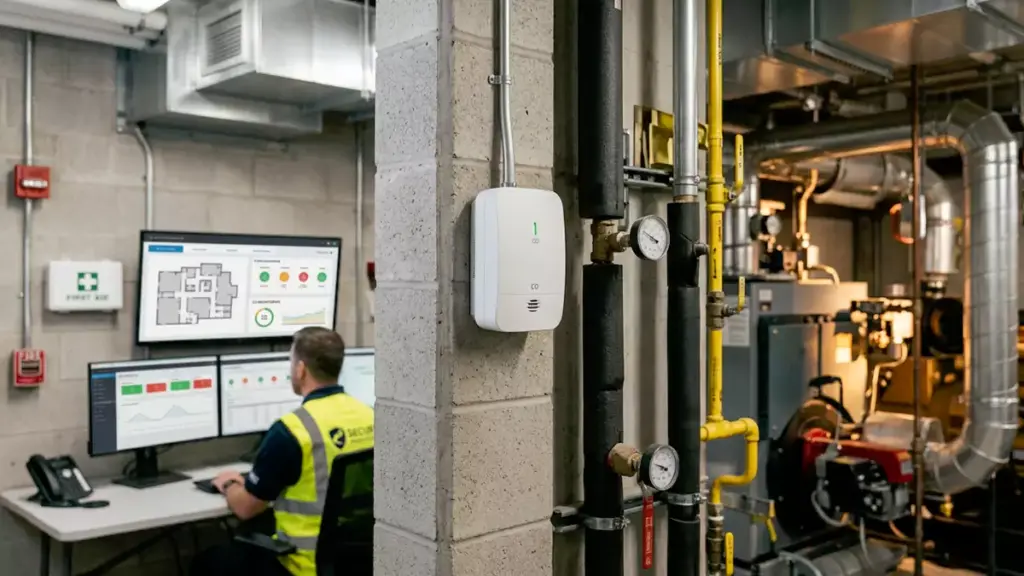
Carbon Monoxide Alarm
Carbon monoxide is a real risk in any commercial facility with combustion equipment, boilers, generators, parking garages, or fuel-fired systems, and because it's odorless and undetectable without a working sensor, staff often have no warning before exposure becomes dangerous. Requirements for CO detection vary by facility type and local code, and coverage gaps are common in buildings that added combustion equipment after the original alarm system was installed. Detection needs to reach monitoring immediately, a CO alarm that only sounds locally does little good in an unoccupied area or after hours. JMG SECURITY SYSTEMS evaluates where CO risk actually exists in a facility, positions detection accordingly, and ties it into ongoing monitoring, so an alert triggers a real response rather than going unheard in an empty building.
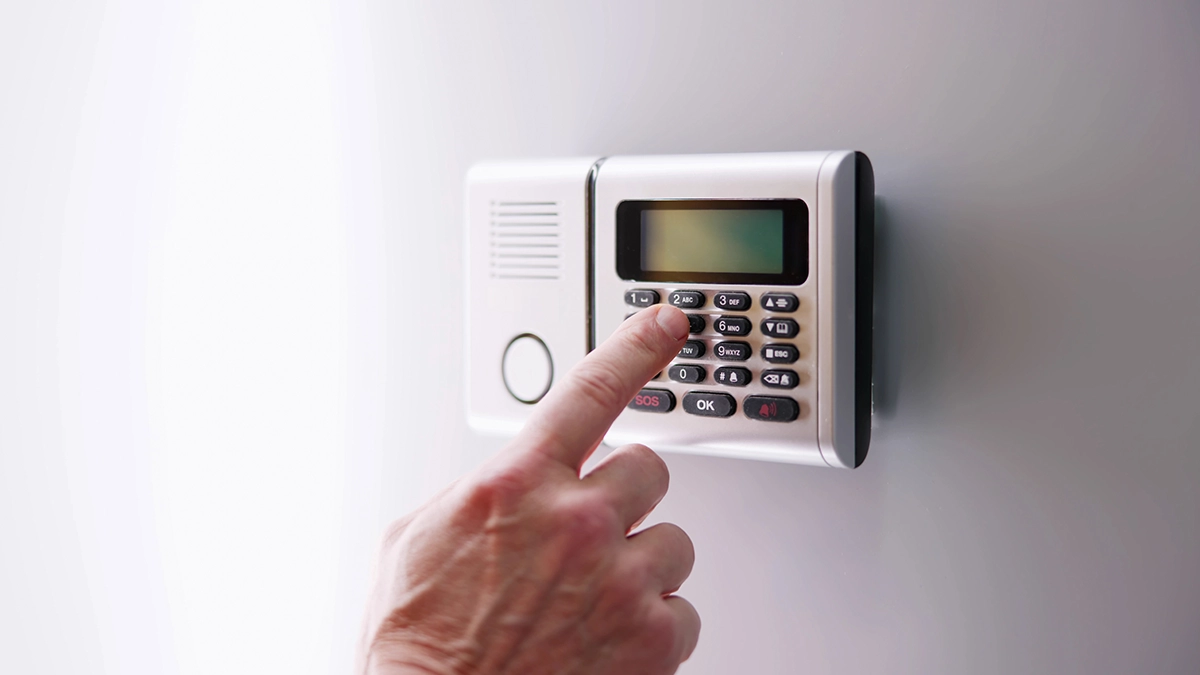
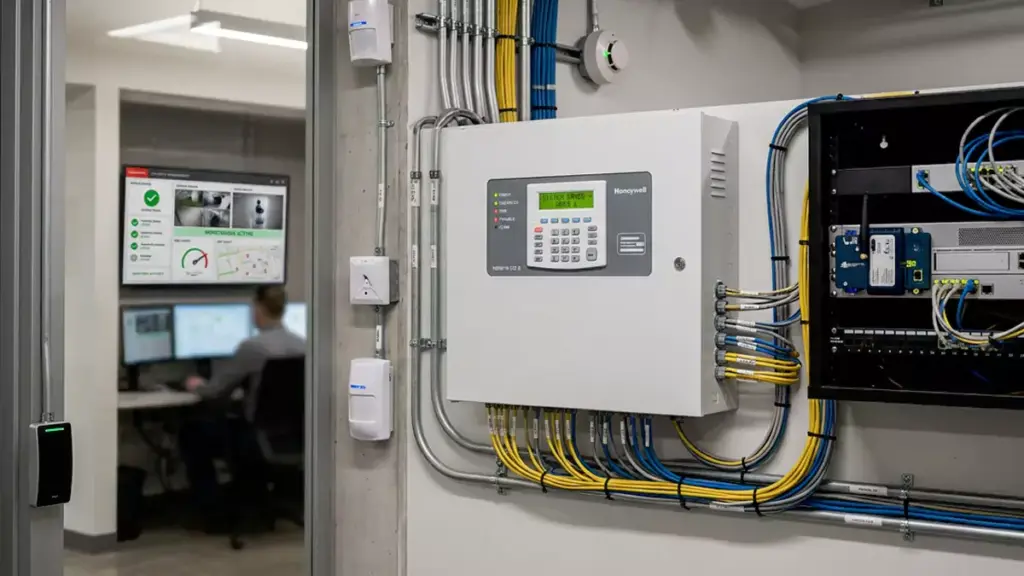
Alarm Control Panels
The control panel is the backbone of a commercial alarm system, every sensor, door contact, and detector routes through it, so a panel that's outdated, poorly configured, or incompatible with newer devices limits what the rest of the system can actually do. Many facilities run into this after piecemeal upgrades over the years: new cameras or sensors added, but still tied to a panel that wasn't built to support them, creating gaps that aren't obvious until something fails to trigger. The panel also determines how alerts reach monitoring, so its reliability directly affects response time when an incident occurs. JMG SECURITY SYSTEMS evaluates existing control panels as part of any system upgrade, replacing or reconfiguring where needed so every connected device functions as one coordinated system rather than a patchwork of add-ons the panel was never designed to handle.
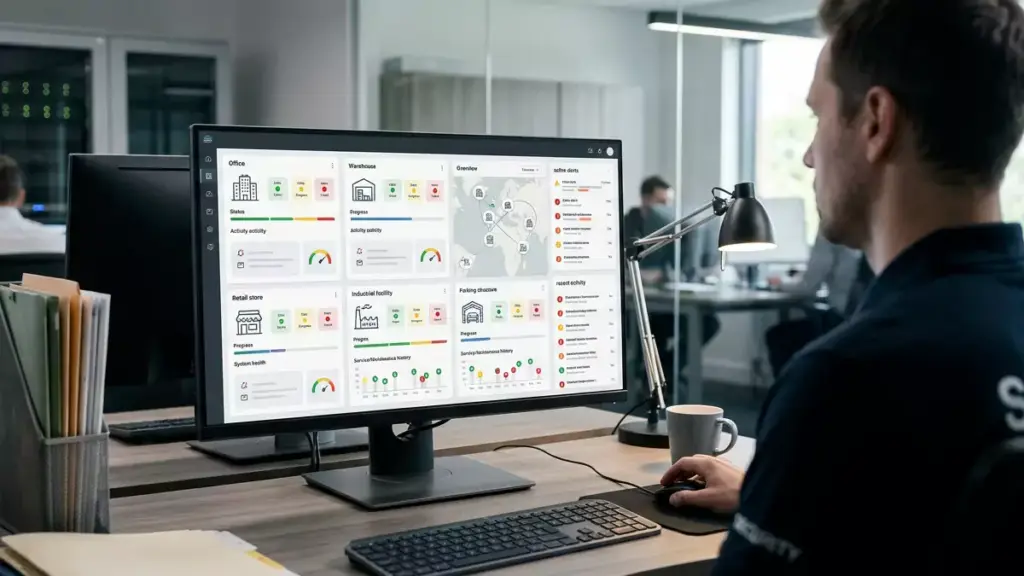
Alarm Company Management Software
For facilities managing alarm systems across multiple sites, the software behind the system matters as much as the hardware, it's what determines whether alerts, service history, and system status are visible in one place or scattered across separate logins and vendors. Weak visibility here creates real gaps: a missed service ticket, an alert that goes unacknowledged, or no clear record of system activity when it's needed for insurance or compliance purposes. The right management platform gives decision-makers a single view into alarm activity, monitoring status, and service history across every property, not just the one someone happens to be checking. JMG SECURITY SYSTEMS platform gives clients centralized visibility, so managing alarm systems across a portfolio doesn't mean juggling multiple vendors and dashboards to get a straight answer on what's actually happening.
One alarm management partner
Verify Alarms Before Response.
JMG SECURITY SYSTEMS helps reduce false alarms by improving signal accuracy, reviewing triggers, and connecting alarm events with better verification processes.
Stop paying for the same mistake
Fix The Cause, Not The Symptom
JMG SECURITY SYSTEMS identifies repeat alarm triggers and recommends solutions based on the actual device, zone, or system issue.
Proactive health monitoring
Improve Response Confidence
Combine alarm signals, verification methods, and monitoring workflows to help ensure the right response when events occur.
Panel
Alarm Signal
Central Station
Business-type-specific protocols
System-Specific Requirements
The devices, the traffic patterns, and the false-alarm triggers common to a retail storefront look nothing like what a distribution center or medical office deals with, so a management approach built for one rarely fits the other cleanly.
01
Retail Storefronts
High door-contact traffic and end-of-day arm/disarm timing errors.
02
Multi-Tenant Office Buildings
Shared zones and after-hours cleaning-crew false triggers.
03
Warehousing & Distribution Centers
Large motion coverage areas prone to forklift and pallet-jack triggers.
04
Restaurants & Food Service
Kitchen equipment and steam-related false detection issues.
05
Medical & Professional Offices
After-hours staff and vendor access requiring updated contact lists.
06
Multi-Location Retail & Franchise Operators
Dozens of panels needing one consolidated management standard.