



Commercial security expertise since 1987
Commercial Security Engineering
We turn your facility requirements into a buildable security plan. JMG SECURITY SYSTEMS assesses your site, designs a standalone or integrated system, and carries it through installation, testing, training, and support, from the Central Coast to San Diego.
✓
Have a system that technically works but never performs the way it should? We'll find out what's actually wrong.
Local experience
Engineering SoCal security systems since 1987
System approach
Full commissioning & QA testing
Infrastructure
Power, redundancy & failover engineering
System fit
Advanced technical troubleshooting
01 · The execution gap
Design Alone Doesn’t Guarantee Performance
Even a well-planned system runs into real-world variables, power fluctuations, thermal stress, signal interference, mounting conditions, that a drawing can't fully predict, which is exactly where the technical engineering work either catches the problem or lets it become a recurring service call.
01
Devices are installed but never properly calibrated
Cameras, sensors, and readers left at default settings rarely perform at the level the hardware is actually capable of.
JMG
JMG SECURITY SYSTEMS calibrates and tunes every device to the specific conditions of its mounting environment.
02
Power and redundancy get treated as an afterthought
An underspecified power supply or missing failover path turns a minor outage into full system downtime.
JMG
Power load calculations and failover engineering keep the system running when conditions aren't ideal.
03
Commissioning gets skipped or rushed
A system that's never formally tested against its own specifications ships with problems nobody caught.
JMG
Full commissioning and QA testing verify every device performs as designed before sign-off.
04
Recurring technical issues never get root-caused
The same glitch keeps getting patched instead of properly diagnosed.
JMG
Advanced field troubleshooting identifies and resolves the actual source of the problem.
02 · One technical execution partner
The Work Behind A Working Security System
Security engineering is the execution layer, turning specifications into properly calibrated, powered, and tested hardware, and solving the technical problems that surface once a system is actually running.
01
Device calibration & performance tuning
Cameras, sensors, and readers configured for their specific mounting and environmental conditions.
02
Power load calculations & UPS engineering
Electrical capacity sized correctly to prevent underpowered or unstable equipment.
03
Redundancy & failover engineering
Backup pathways designed so a single point of failure doesn't take the system down.
04
Commissioning & QA testing
Formal verification that every device performs against its specification before go-live.
05
Environmental & mounting engineering
Hardware selection and placement engineered for weather, thermal, and structural conditions.
06
Advanced field troubleshooting
Root-cause diagnosis for recurring or complex technical issues.
03 · Install to sign-off
Installed Vs. Operational: What’s The Difference?
A device being mounted and powered on isn't the same as it performing correctly, the engineering steps between those two points determine whether a system holds up under real conditions or fails quietly until someone notices.
Installation
Hardware Is Installed To Specification
Devices are mounted and connected according to the design documentation.
Verification
Power And Connectivity Are Verified
Load calculations and failover paths are tested under real conditions.
Calibration
Devices Are Calibrated For Their Environment
Settings are tuned to actual lighting, distance, and mounting conditions.
Commissioning
System Is Formally Commissioned
Every device is tested against its specification and documented.
Validation
Performance Is Validated Post-Deployment
Follow-up testing confirms the system holds up over time, not just on day one.
04 · Engineering Readiness: From Design to Build
What Is Commercial Security Engineering?
Commercial security engineering is the process of translating a facility’s security objectives, workflows and constraints into a documented system architecture that can be priced, installed, tested and supported. It can address video surveillance, access control, intrusion detection, fire detection, monitoring, communications and integrations. The approved project scope determines which locations, systems, drawings, schedules and calculations are included.
How Does Commercial Security Engineering Work?
The process begins by defining security and operational objectives. JMG SECURITY SYSTEMS gathers site information, reviews agreed areas and workflows, inventories relevant existing technology and coordinates with facilities, security, IT and other stakeholders. Requirements are then mapped to zones, infrastructure, system architecture, integration logic and acceptance criteria. The output may be a custom proposal, approved design package or phased modernization plan, based on scope.
How Do Standalone And Integrated Systems Differ?
A standalone system performs a defined function in its own application. An integrated system connects supported functions so operators can manage related events or data in a more coordinated workflow. Integration is not automatically the right answer for every site. JMG SECURITY SYSTEMS evaluates the operational benefit, compatibility, licensing, network, maintenance and change-management requirements before recommending an architecture.
How are cloud, on-premise and hybrid options evaluated?
The decision depends on operational control, IT policies, connectivity, cybersecurity responsibilities, update practices, storage or retention needs, user administration, integrations, capital and operating preferences, and product availability. A hybrid model may keep some functions or data on site while using cloud services for selected management or remote-access capabilities. JMG SECURITY SYSTEMS should document assumptions with the customer’s IT and security teams.
How does security engineering support remote and multi-site management?
System design can define which roles need visibility, what each role may control, how credentials and alerts should be managed, and which information must remain local. Where selected products and licenses support it, centralized dashboards or mobile tools can help authorized teams manage multiple locations. Remote access must follow the customer’s network, identity, privacy and change-control requirements.
Engineering That Gets Tested Before It Gets Trusted.
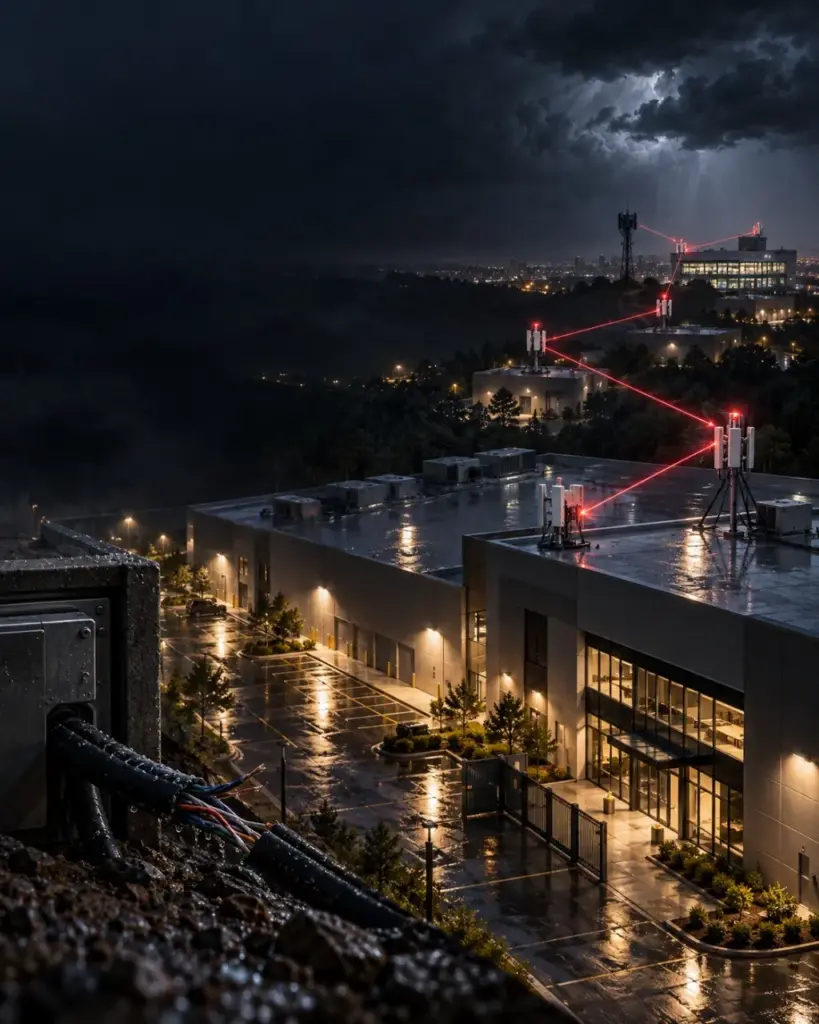
JMG SECURITY SYSTEMS's engineering process is built to hold up under real conditions, power fluctuations, extreme weather, high device loads, and the kind of long-term operation that exposes anything left uncalibrated.
05 · Mounted and powered vs. tuned and verified
Turning A Device On Doesn’t Make It Perform
A camera can be mounted, wired, and recording, and still be badly out of focus, underpowered, or configured for the wrong lighting conditions, which means a system can technically be "installed" while quietly underperforming everywhere it matters. Plenty of systems get installed correctly and still underperform, because installation and engineering aren't the same discipline. Calibration, power verification, and formal commissioning are what turn a properly mounted device into one that actually performs the way it was specified to.
Installed only
Device calibration
Left at factory defaults
Power sizing
Estimated or assumed adequate
Redundancy
Single point of failure
Testing before go-live
Informal or skipped
Environmental fit
Generic hardware placement
Recurring issues
Repeatedly patched, not resolved
Properly engineered
Device calibration
Tuned to specific environmental conditions
Power sizing
Calculated and verified under real load
Redundancy
Failover pathways engineered in
Testing before go-live
Formal commissioning and QA sign-off
Environmental fit
Engineered for weather, thermal, and structural conditions
Recurring issues
Root-caused through advanced troubleshooting
06 · Redundancy & failover design
A System That Stays Online During Outages
Power load calculations and UPS engineering are sized to actual equipment demand, with failover pathways built in so a power interruption or hardware fault doesn't take the entire system offline.
Full commissioning & qa
Every Device Tested Against Its Own Specification
Before sign-off, JMG SECURITY SYSTEMS formally tests each device's performance against its design specification, documenting results so issues get caught during commissioning instead of discovered months later during actual use.
Report
System Commissioning
Commissioning Verification
Environment-specific engineering
Every Location Requires A Different Approach
The technical priorities, thermal tolerance, power redundancy, weatherproofing, signal interference, shift substantially depending on where the equipment lives and what conditions it has to perform under.
Outdoor & rooftop installations
Weatherproofing and thermal engineering for extreme heat, cold, or moisture exposure.
Data centers & server facilities
Redundant power and failover engineering for zero-tolerance uptime environments.
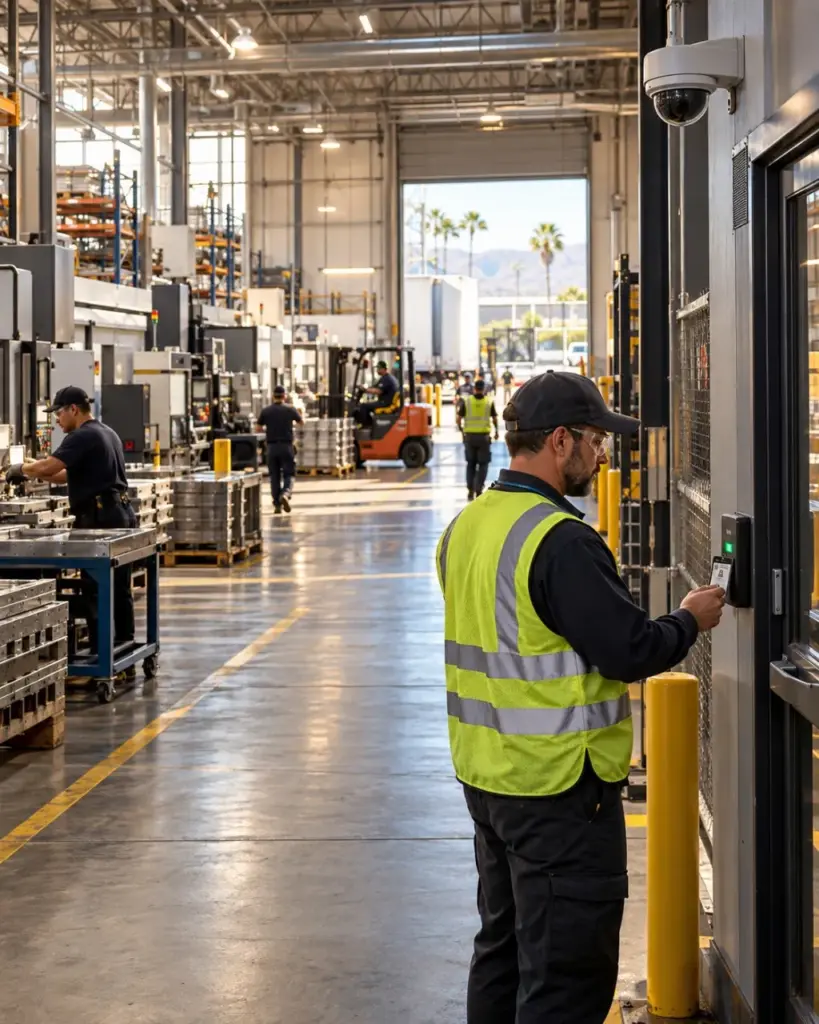
Industrial & manufacturing sites
Equipment engineered for vibration, dust, and electromagnetic interference.
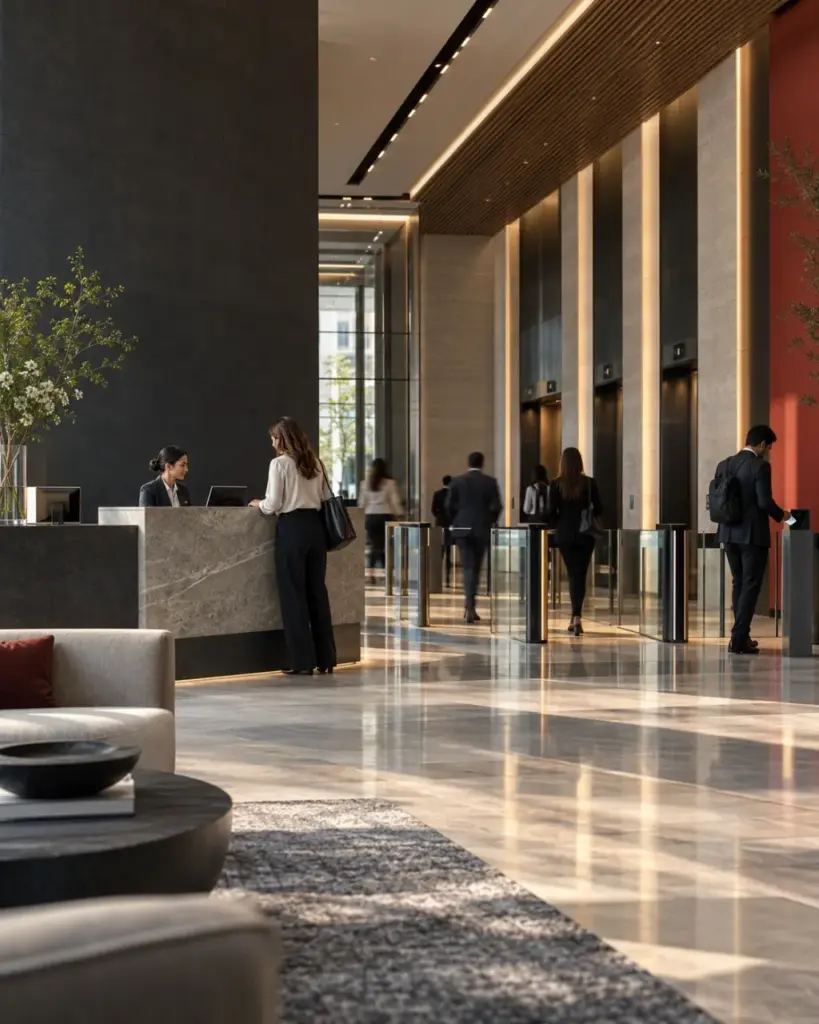
High-rise & multi-tenant buildings
Signal and cabling engineering across long vertical runs and shared infrastructure.
Remote or unmanned facilities
Failover and remote diagnostics engineered for sites without on-site technical staff.
High-traffic commercial spaces
Performance tuning for equipment under continuous, heavy-duty operation.
See How Your System Performs Against Its Design
A system that's installed but never calibrated is only performing at a fraction of what it's capable of.