






Engineered for how your building actually operates.
Commercial Security System Design
Most security problems start with a system that was never designed as one. JMG SECURITY SYSTEMS designs integrated, risk-assessed, code-compliant security architecture that scales with your facility.
✓
Inherited a patchwork of mismatched security equipment? We'll show you what a real architecture looks like instead.
Local experience
Designing SoCal security systems since 1987
System approach
C-7/C-10 licensed
Infrastructure
UL 2050 & NICET-aligned engineering
System fit
Vendor-agnostic architecture
01 · The design gap
Designed Systems. Not Assembled Systems.
A camera added after a break-in, a reader installed after a tenant complaint, a panel swapped in because the old vendor stopped answering calls, none of it was drawn up as a single plan, which is exactly why so many commercial buildings end up with blind spots, redundant hardware, and equipment that can't talk to each other.
01
Equipment was purchased reactively, not planned proactively
Each device solved a problem in isolation, with nobody looking at how the pieces fit together.
JMG
JMG starts with a security master plan, not a shopping list.
02
Proprietary hardware locks you into one vendor
Closed platforms mean every future change runs through the company that sold you the first system.
JMG
Open-protocol, vendor-agnostic architecture keeps your options, and your leverage, intact.
03
Nobody mapped the risk before mapping the cameras
Camera and access point placement driven by guesswork instead of a documented threat assessment.
JMG
JMG's design process starts with a formal risk and vulnerability assessment of the site.
04
The system that fits today won't fit in three years
Growth, renovation, or a new compliance requirement can strand a design that wasn't built to expand.
JMG
Phased, scalable architecture built around a technology roadmap, not a single install date.
02 · One design-build partner
Design First. Install Second.
Security system design is the engineering layer that happens before installation, the site survey, the risk assessment, the drawings, and the technology selection that determine whether everything downstream works together or fights each other.
01
Site survey & infrastructure audit
A full assessment of existing cabling, power, and network capacity before anything is specified.
02
Risk & vulnerability assessment
A documented review of threat exposure by entry point, zone, and asset.
03
Layered security architecture
Access control, video, intrusion detection, and alarm systems designed to function as one integrated platform.
04
Low-voltage & cabling infrastructure planning
Pathway and bandwidth planning sized for current and future device loads.
05
Code & permit-ready documentation
Submittal packages and as-built drawings aligned with fire, life-safety, and local AHJ requirements.
06
Technology roadmap & phased rollout
A design built to expand in stages as budget, square footage, or risk profile changes.
03 · Design to deployment
From Blueprint To Protection
A design is only as good as the process behind it, skipping a step here is usually where a "finished" system quietly turns into next year's retrofit project.
Discovery
Site Conditions Are Documented
Existing infrastructure, blind spots, and constraints are recorded on-site.
Assessment
Risk Exposure Is Assessed
Entry points, high-value zones, and threat scenarios are formally evaluated.
Design
Architecture Is Drafted
Camera placement, access points, and system layers are engineered together.
Documentation
Drawings Are Prepared For Compliance Review
Submittals and permit documentation are aligned with code requirements.
Deployment
System Is Deployed In Planned Phases
Installation follows the roadmap instead of running ahead of it.
04 · Who it's for
Building Security System Design
Every building has its own physical logic, where people naturally enter, where deliveries arrive, where a determined intruder would look for an opening. JMG SECURITY SYSTEMS’s building-specific design process walks your property to identify those patterns firsthand, rather than relying on blueprints alone, so camera placement, access points, and sensor coverage reflect how the building actually functions day to day. As a C-7/C-10 licensed integrator, we handle that assessment with the technical depth to translate what we find into a system that actually closes the gaps we identify.
Facility Security Design
Facility security design has to account for more than just perimeter protection, internal zones, restricted areas, and varying access levels within a single property all need their own consideration. JMG SECURITY SYSTEMS builds designs that layer security appropriately across your facility, ensuring sensitive areas get tighter controls without over-securing spaces that don't need it. It's a calibrated approach, built around your facility's actual internal risk structure rather than applying uniform security everywhere.
A System That Passes Inspection And Makes Sense On Paper.
JMG SECURITY SYSTEMS designs security architecture to withstand more than a walkthrough, permit review, insurance underwriting, and the kind of post-incident audit where every design decision gets a second look.
05 · Bolted-on hardware vs. designed architecture
Camera Count Doesn’t Define Coverage
A building can own a large amount of security hardware and still have no actual architecture behind it, devices purchased at different times, from different vendors, solving different one-off problems, with nobody ever stepping back to check whether the pieces work as a whole. Buying more equipment doesn't fix a design problem, it usually compounds it. A system that was engineered as a single architecture, with the risk assessment and infrastructure planning done up front, is the difference between security that happens to exist and security that was actually built to work.
Assembled over time
Coverage logic
Based on past incidents only
Vendor flexibility
Often locked to one manufacturer
Infrastructure planning
Retrofitted around existing cabling
Code compliance
Addressed after the fact, if at all
Scalability
Requires rework to expand
System integration
Devices operate independently
Engineered from the start
Coverage logic
Based on a documented risk assessment
Vendor flexibility
Open-protocol, vendor-agnostic by design
Infrastructure planning
Sized and planned before installation
Code compliance
Built into permit-ready documentation
Scalability
Phased roadmap built for growth
System integration
Access, video, and alarms function as one platform
06 · Documentation that holds up to permit review
Drawings Built For Easy Approval
Submittal packages, as-built drawings, and permit documentation are prepared to match fire, life-safety, and local jurisdiction requirements from the start, so a design doesn't stall in plan check over something that should've been caught on paper.
Vendor-agnostic by design
Architecture That Doesn't Box You Into One Vendor
JMG SECURITY SYSTEMS designs around open-standard hardware wherever possible, so future upgrades, service, or vendor changes stay in your hands, not dictated by whichever manufacturer got the original contract.
Platform
Security System Design
Unified Architecture
Facility-type-specific architecture
A Warehouse's Risk Profile Isn't A Medical Office's.
The right design priorities, perimeter hardening, credentialing complexity, sensitive-area segmentation, shift substantially depending on the facility type, its layout, and who needs access to what.
Industrial & warehouse facilities
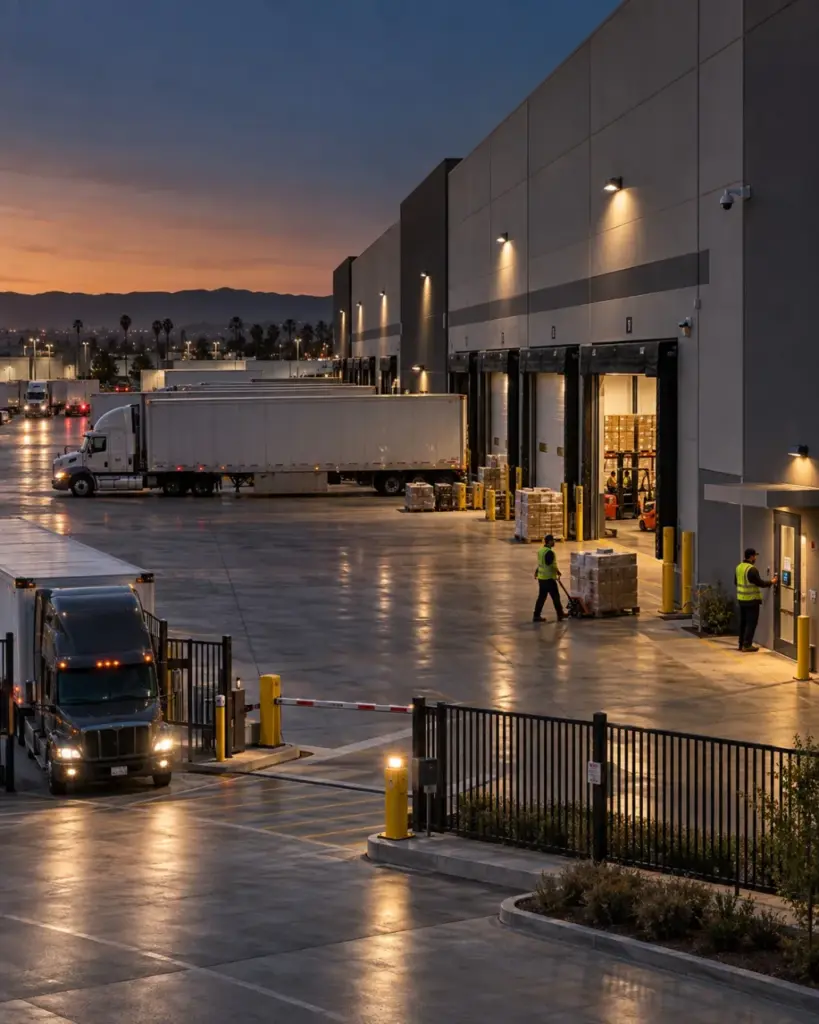
Perimeter and loading-dock security engineered around high-traffic logistics flow.
Medical & healthcare facilities
Sensitive-area segmentation designed around HIPAA-conscious access zoning.
Corporate & multi-tenant offices
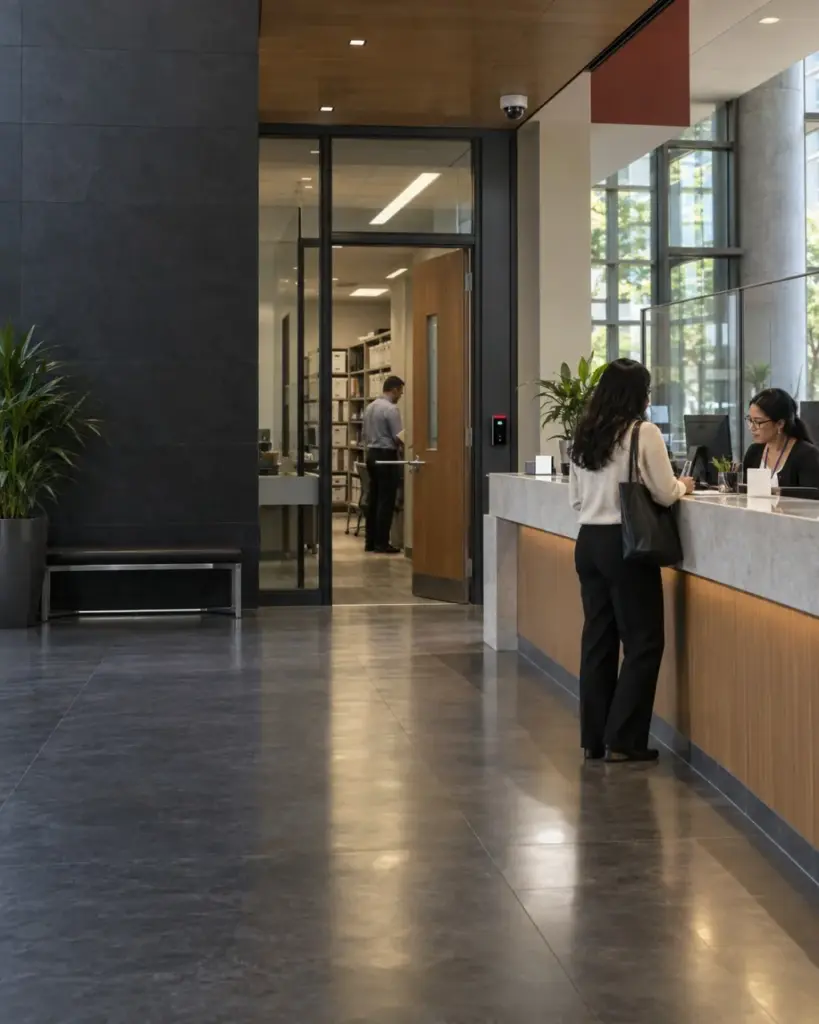
Credentialing architecture built for shared entry points and tenant separation.
Retail & commercial storefronts
Loss-prevention-driven camera and access placement for public-facing spaces.
Educational campuses
Layered architecture coordinated with campus-wide safety and lockdown protocols.
Critical infrastructure & industrial sites
Hardened, redundant design built around regulatory and insurance requirements.
A Security System Needs More Than Hardware
Find out whether your current setup was ever actually engineered, or just accumulated.